

Anyang Qunzhi Machine Tool, formerly known as bosheng Machine Tool, has been established for more than 10 years. It now covers an area of 150,00 square meters and has more than 70 senior technicians and more than 300 technical personnel of various types.
It is a comprehensive machine tool manufacturing enterprise integrating machine tool R&D, manufacturing and technical consulting services.
Wide Range Of Application
Our products are used in many fields, such as Aviation, automobiles, ships, agricultural machinery, steel, engineering machinery, military industry, mining machinery, railway locomotives, mechanical processing, etc
One-Stop Service
- Pre-sales
We will select the machine tool model according to the customer's needs, confirm the technical agreement with the customer, and complete the customer quotation
- During sale
Track the details of machine tool purchase parts and workshop production and assembly details.
- After-sales
After receiving the user's fault report, the technicians will communicate online and provide a response within 24 hours and a solution within 48 hours.
Professional Technical Team
We have more than 70 professional technical engineers to provide professional services.
Advanced Equipment
We have professional equipment, such as Boring and milling machining center, CNC grinder, etc.
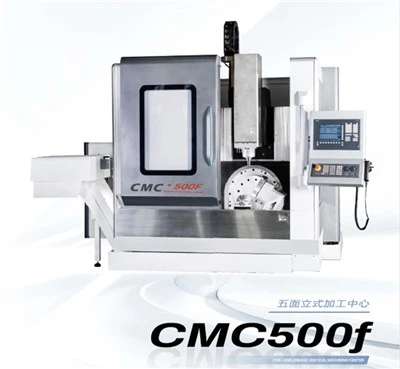
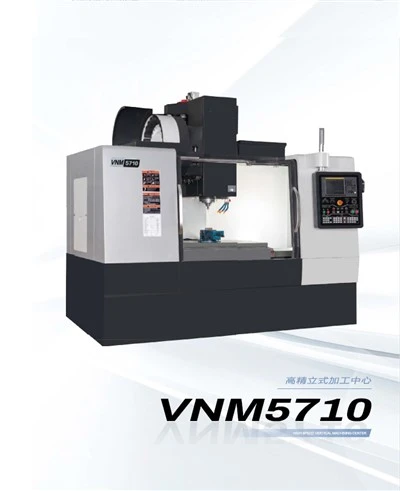
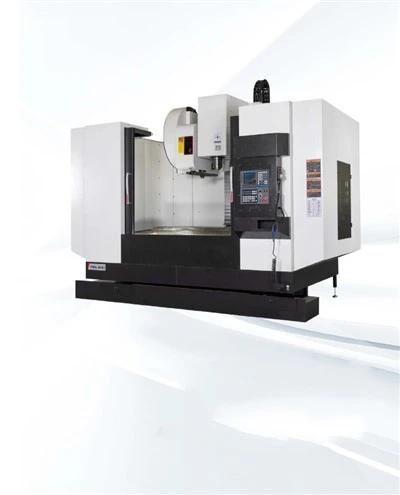
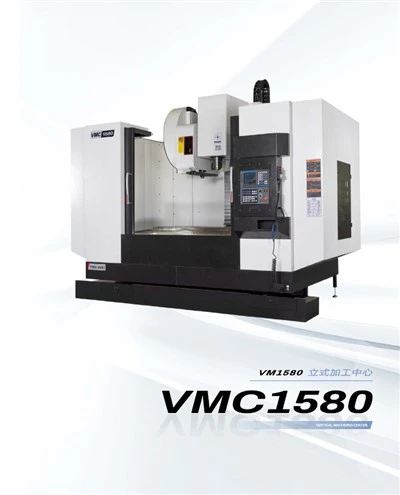
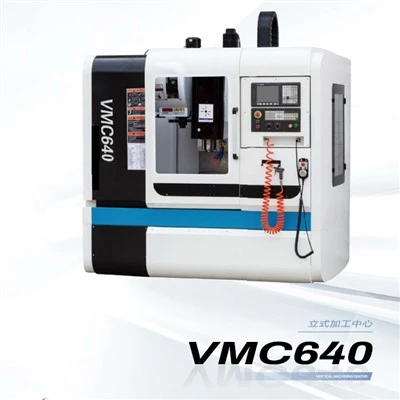
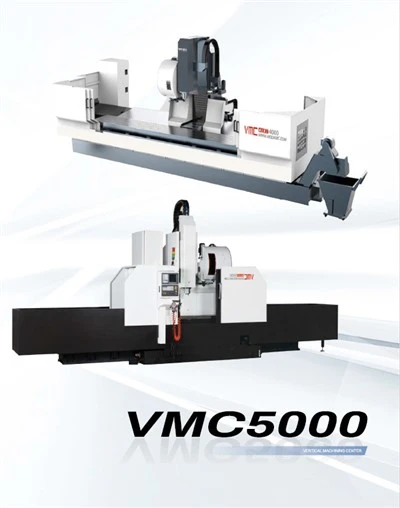
Vertical machining technology is one of the most productive tools in the CNC machine shop. It has various tools in the changer and other options that enhance and customize productivity. CNC vertical machining centers are flexible multi-functional tools that help machine holes and other properties in components with a flat surface. It operates in a vertical direction using a spindle that works at a steep angle.
Ease of Operation
The very structural design on VMC’s allows much better visibility while working on these machines. This also means that operators are much more likely to catch and correct any potential problems during the milling process.
Operators spend less time on setup and programming because the user-friendly CNC controls make programming simple and the design of the machine makes fixturing the workpieces easy. This means that more time is spent machining while meeting the highest expectations.
Higher Productivity
The open visibility of the vertical machining centers makes it much easier for larger part manufacturing. They are the preferred choice for easier, less complex jobs that require lower quantities. For quick milling jobs, these machines are the perfect solution.
More Popular Choice
These are the most popular choice in milling machines. That means they are going to be more widely available and less expensive. The cost of machines is cheaper so the cost of operation & production go down, meaning you can pass that savings on to your customers.
Simple Operation
Vertical machining centers are typically easy to use and very user-friendly.
As this type of machining center is so popular, finding skilled workers with experience working with these tools is usually very easy.
Availability and Costs
A vertical machining center usually has lower upfront costs than machining centers with horizontally oriented spindles. This is, in part, thanks to its vast popularity.
Because various types of machine shops and manufacturers use these machining centers, they are often readily available and cost-effective. Additionally, the projects that require vertical machining centers often have a lower price point for consumers.
Precision and Accuracy
These machine tools offer excellent precision. A CNC vertical machining center can create highly accurate cuts to exact specifications. One of the greatest benefits of these machining centers is how they minimize the risk of human error.
This precision requires machines to be extremely stable. You can enjoy the added benefits of durability and stability when you work with a vertical machining center.
Space
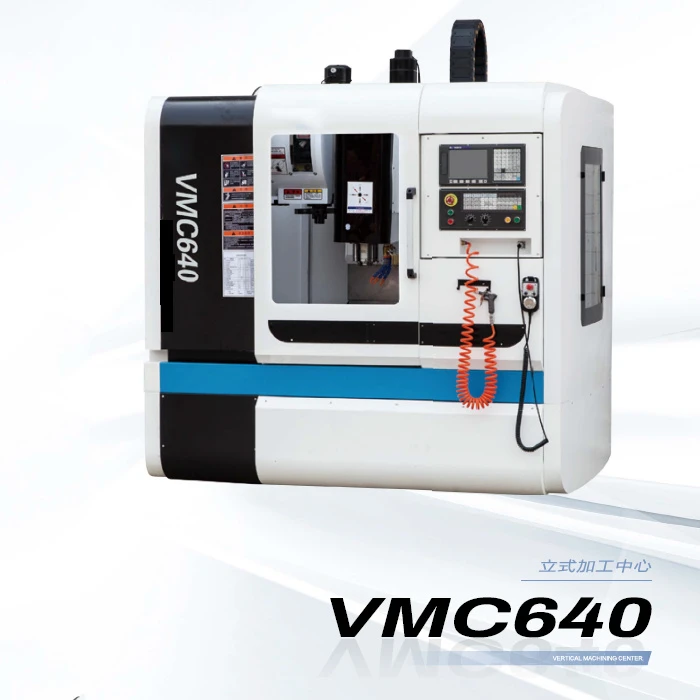
An advantage to having a vertical machining center is that it takes up very little space compared to horizontal machining centers. This is especially beneficial for owners of small shops looking to make the most of their workspace. With less occupied floor space, workers can enjoy more room to move around, or you can introduce additional pieces of equipment to your workshop.
Visibility
The design and setup of a vertical machining center allow for great visibility while a project is in action.
While these machines are already highly precise, this open view can assist in even greater attention to detail. Thanks to the machine’s open configuration and visibility, operators have a greater chance of identifying imperfections and adjusting operations accordingly.
Versatility
Vertical machining centers are very versatile.
In addition to being easy to use, operators can use vertical machining centers to produce various shapes and dimensions that set this machine tool apart. From creating complex curved parts to grooves and slots, a vertical machining center can perform a vast range of tasks.
Vertical Machining Center Features for Improving Productivity
Metal-Cutting Capability
Metal cutting capability of vertical machining center could help cutting wide variety of materials. Cutting ability would be the main key for improving the productivity. Therefore, spindle is one of the most important features to evaluate on any vertical machining center.
Tooling Support and Capacity
A typical VMC is required to produce a variety of parts, perform quick part change-overs, and check tool quality frequently. However, not all Vertical Machine Centers are designed with these considerations in mind ,it would cause frequent downtime that can quickly add up to higher parts costs, extended delivery times, and most especially it loses a significant amount of profit. That is the reason why manufacturers are seeking some solutions to avoid these kinds of issues that a vertical machine center offers a good amount of cooling capacity.
Control Software
The control software can facilitate or limit the flexibility of data storage, coordinate systems, probing, and networking of the machine. If the interface is not user friendly, the operators will spend more time to solve the problem. Needless complexities waste the time of the operators and the uptime of the machine.
Automation Integration
Automation integration makes different versions of automation hardware and software work together. It combines several subsystems to work together as one large system. The automation Integration reduces the need of manpower, and also increases the productivity.
Fixturing and 4th-Axis Potential
The control software can facilitate or limit the flexibility of data storage, coordinate systems, probing, and networking of the machine. If the interface is not user friendly, the operators will spend more time to solve the problem. Needless complexities waste the time of the operators and the uptime of the machine.
Operator-Friendly (Ergonomics)
It gives efficiently customize your work environment and make you feel comfortable and safety while you perform your job. It automation can also improve operator ergonomics through additional time and space to set up workpieces.
Productivity Improvement
Increasing the spindle utilization and reduce changeover and setup times to improve productivity. Enhance automatic function to improve flexibility and throughput.
Working Principle Of Vertical Machining Centers
The vertical machining center working principle is based on the drawing of the parts, and the manual processing program is used to automatically process the parts processing program, and the various machine tools and all the process parameters required for the parts are converted into information codes acceptable to the numerical control device of the machine tool. These codes are stored on an information carrier (punctured tape, disk, etc.) and the information carrier is sent to the input device. Read the information and send it to the numerical control device, or use the computer and the machining center to communicate directly to realize the input and output of the part program.
Components Of A Vertical Machining Center
Rotating Spindle
The milling spindle is usually perpendicular/vertical to the working table. It is a rotating shaft with a unit for holding a tool or workpiece. Generally, the spindle shaft acts as a positioned, support, and rotary drive for workpieces.
Work Table
The table is flat on which to put the workpiece directly or using several fixtures such as hard clamping vises or milled aluminum parts. The table has an X-axis which includes the left and right motion, while the Y-axis has a motion to the front and back. These axes and the Z-axis allow you to add unlimited features to workpieces across the planes of motion.
Coolant System
Most CNC vertical milling centers use recalculating coolant systems to ensure parts and cutter tools are well lubricated. This coolant system often utilizes water and soluble oil amongst various liquids.
Rotating Tables
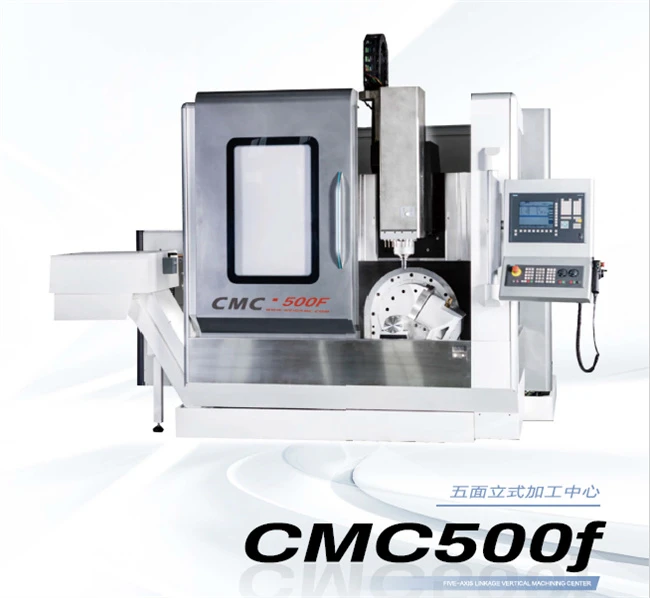
Adding extra axes to the vertical mills can significantly enhance productivity by changing a simple 3-axis milling machine into a 4-axis or 5-axis machine capable of producing complex components with different surfaces like turbine blades.
Tool Changer
The tool changer increases the productivity of the vertical machine center by allowing the automatic selection of tools for different tasks ranging from rough cutting to fine-hole boring.
Enclosures/Full Covers
These covers help to reduce the splatters caused by the milling operations. Likewise, it safeguards the machinists and the environment from the machining operation.
Quick Loading Loaders
Shuttle tables or other automated part-loading systems help to increase the productivity of the CNC vertical machining center while reducing downtime.
Screw/Chip Conveyor
Chip conveyors or augers can help move chips from the work area to facilitate productivity and eliminate downtime from manually shoveling waste chips.
Applications of VMC Machines
Milling Operations: VMC machines excel in milling operations, producing precise cuts and contours on a wide range of materials, including metal, plastic, and composites.
Prototyping and Production: VMC machines are widely used for rapid prototyping and efficient production of small to medium-sized parts.
3D Machining: VMC machines are capable of 3D machining, allowing for the creation of complex geometries and intricate designs.
Die and Mold Making: VMC machines are frequently used in die and mold making processes, where precision and accuracy are crucial.
Our Factory
Common Problems of vertical machining centers
As one of the most professional vertical machining center suppliers in China, we're featured by quality products and competitive price. Please rest assured to buy vertical machining center for sale here from our factory. Also, customized service is available.
Roller Linear Rail Vertical Machining Center, Economical Horizontal CNC Lathe, 5 Axis Machining Center